How to Price Sneakers for Local Resale: A Simple 4-Step Method
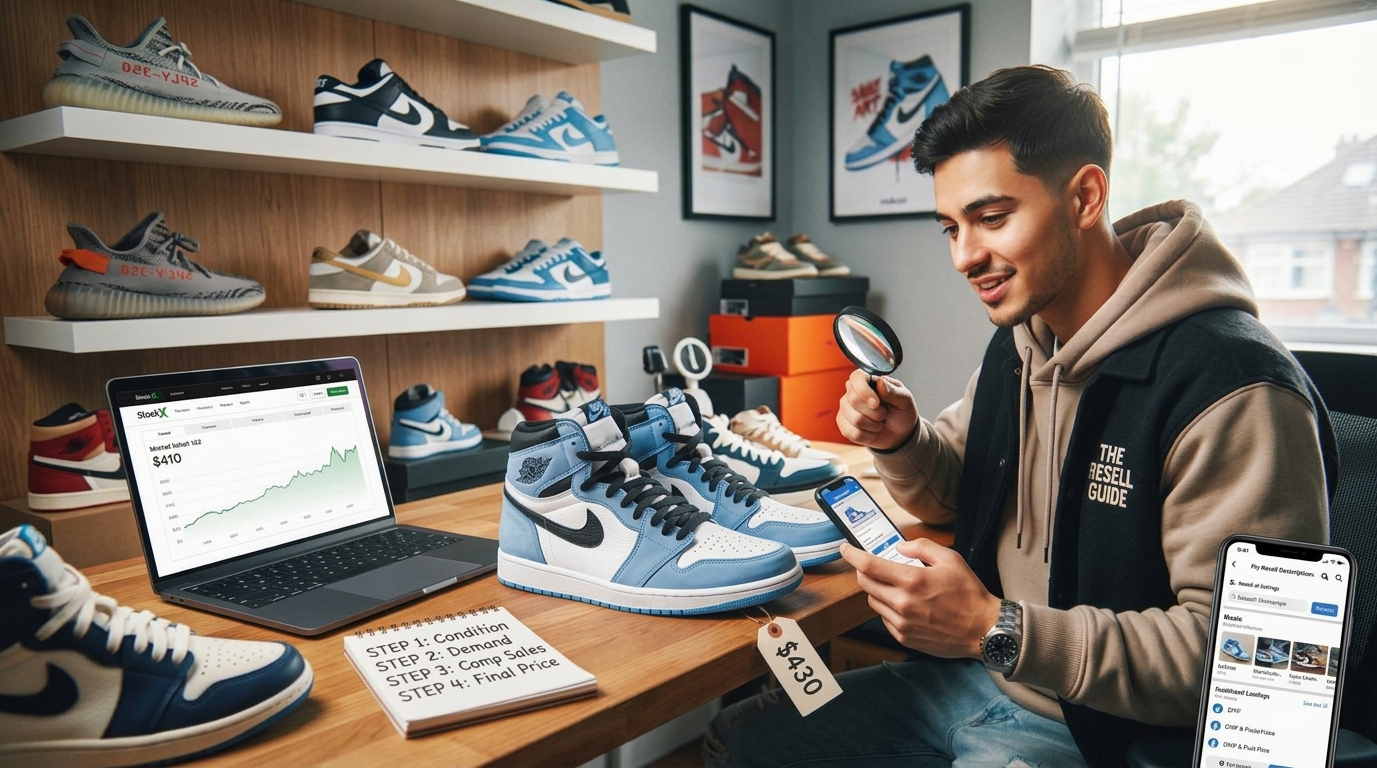
In short: Check sold sneaker listings, adjust for size and condition, subtract local costs, and price based on how fast you want to sell.
Key takeaways
- Price from recently sold listings, never from asking prices.
- Size, condition and box matter, so adjust the market price for your exact pair.
- Know your break-even price after every cost before you list.
- Set a starting price that fits how quickly you want to sell, and review it after a week.
To price sneakers for local resale, check what the same pair recently sold for, adjust for size and condition, subtract your costs to find your break-even price, then choose a starting price that matches how quickly you want to sell. The four steps below turn that into a repeatable routine you can use on every pair, whether you are flipping one pair a month or building a steady side income.
Step 1: What did the same pair actually sell for?
Start with sold listings, not asking prices. Asking prices show what sellers hope to get; sold prices show what buyers actually paid. A pair can sit online for months at an inflated asking price, so building your price around those listings often leads to a pair that never moves.
Look for the exact model, colourway and release. Small differences matter more than most new sellers expect: a retro versus an original release, a general release versus a limited collaboration, or a slightly different colour blocking can change the value a lot. Double-check the style code on the size tag and match it to the listings you compare against.
Check several recent sales rather than one, and note the lowest, highest and typical price. A single sale can be an outlier, such as a rushed seller or a buyer who overpaid. If prices are rising or falling, the most recent sales matter most, because hype, restocks and seasons can shift demand quickly. Write your numbers down so you can compare them again later.
Step 2: How do size and condition change the price?
The same model can sell for very different prices depending on the details:
- Size: common sizes sell faster because more buyers are looking for them, while very small or very large sizes can sell slower or at different prices. Some rare sizes sell for more because few pairs exist, so always compare sales in your exact size where you can.
- Condition: new with tags, new unworn, lightly worn and heavily worn belong in different price bands. Creasing, sole wear, yellowing, scuffs and odour all lower the value, while a careful clean can move a pair up a band.
- Box and extras: the original box, extra laces, tags, dust bags and the receipt can help, especially for collectors who want a complete set. A damaged or missing box usually means a lower price.
- Authenticity: buyers pay more when they trust the pair is genuine, so be ready to show proof such as the receipt, order confirmation or clear close-up photos of tags and stitching.
Adjust the market price up or down for your exact pair and describe it honestly in your listing. Being upfront about flaws builds trust and saves time arguing with buyers at pickup.
Step 3: What is your break-even price?
Your break-even price is the lowest price at which you do not lose money. Add up:
- What you paid for the pair, including any tax at checkout.
- Any selling fees on the platform you use, such as listing, payment processing or promotion fees.
- Shipping, packaging or travel costs, including gas or transit to meet a buyer.
- Any duties or taxes that apply to you, especially if the pair was imported.
Anything above that total is profit. Knowing this number before you list stops you accepting an offer that quietly loses money. It also helps you decide whether a pair is worth buying in the first place: if the recent sold range is barely above your break-even, the risk may not be worth it.
Step 4: How should you price sneakers for local resale?
Choose a starting price based on your goal.
| Goal | Listing approach | Trade-off |
|---|---|---|
| Sell quickly | List close to the recent sold range | Faster sale, smaller margin |
| Balanced | List slightly above the range and allow some negotiation | Most common approach |
| Maximum margin | List at the top of the range and wait | Slower sale, more cash tied up |
Local buyers often negotiate, so many sellers list a little above the price they would accept. That gives room for a discount while still landing where you want. Decide your lowest acceptable price before you post, and stick to it. Having a firm floor makes it easier to turn down lowball offers politely and confidently.
How do you write a listing that supports your price?
- Take clear photos in daylight from several angles, including the soles, the heels, the inside lining, the size tag and any flaws. Use a plain background so the shoes stand out.
- Put the brand, model, colourway and size in the title so buyers searching for that exact pair can find it.
- State the condition honestly, mention how many times the pair has been worn, and say what is included.
- Add your pickup area, the times you are available, and the payment methods you accept.
- Reply quickly and politely. Fast, clear answers make buyers more comfortable paying your price.
When should you lower your price?
Review after about a week. If you have had very little interest, compare your price with the latest sold listings and consider a modest reduction. If you have had plenty of views but no offers, the price may be slightly high; if you have had few views at all, your title or photos may need work instead. Constantly cutting prices can signal desperation, so change it with a reason and in small steps.
What to do next
Take one pair you own or plan to buy and run the four steps on paper: sold range, size and condition adjustments, break-even price and listing price. Repeating this routine for each pair will make your pricing faster and more consistent over time. If you want wholesale cost and expected resale prices shown side by side for every item, see how the Strictly·Cash club works. You can also read the FAQ for how selling, shipping and payments work.
These steps are general guidance. Prices change and no outcome is guaranteed, so recheck sold listings each time you list.
Frequently asked questions
Should I price sneakers from asking prices or sold prices?
Use sold prices. Asking prices show what sellers hope for, while sold prices show what buyers actually paid.
How much should I leave for negotiation?
Many local buyers expect to negotiate, so it is common to list slightly above the price you would accept. Decide your lowest acceptable price before you list.
How often should I change my price?
If an item has had little interest after about a week, review recent sales and consider a modest reduction rather than waiting.
This article is general education, not financial, tax or legal advice, and not a promise of earnings. Resale prices change and results vary.